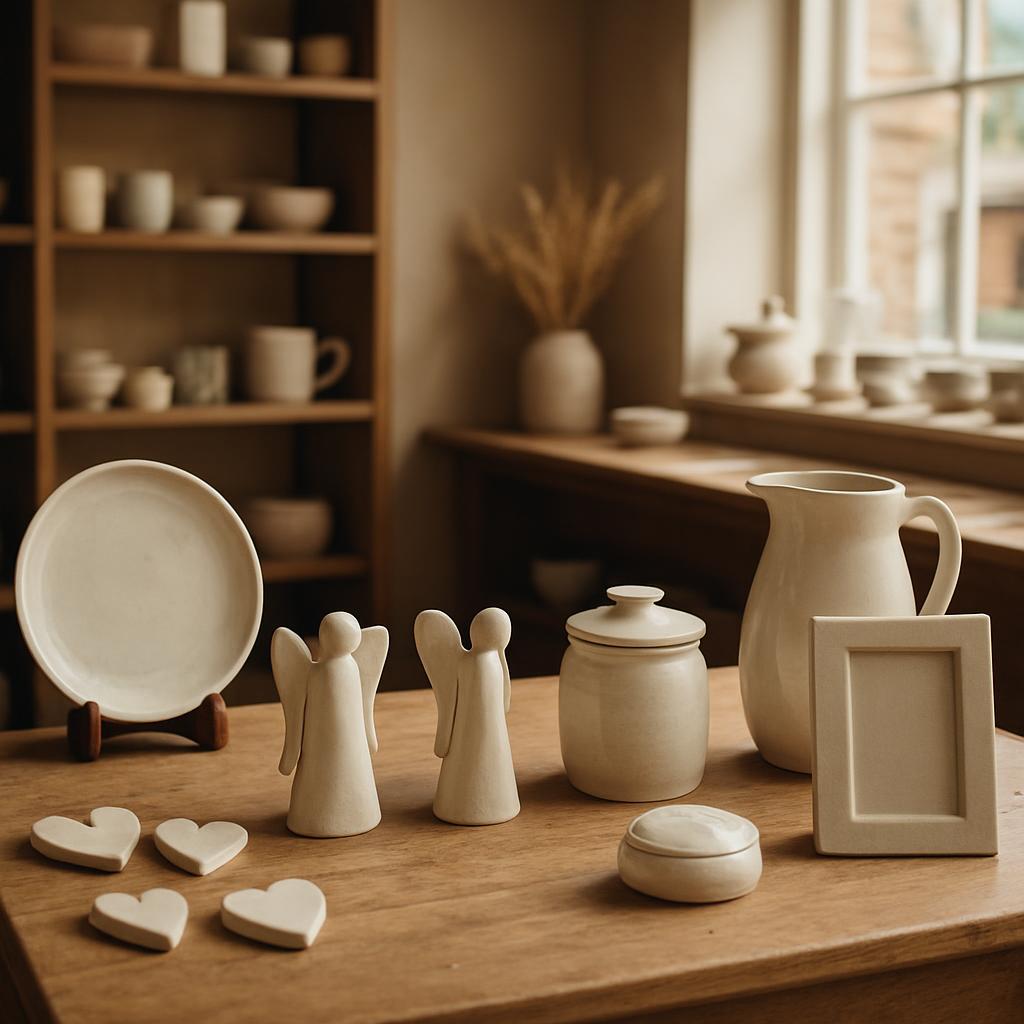
What Papplewick Businesses Know About Ceramic Keepsakes
Find Out More →Walk past The Griffins Head on a Friday night and you'll spot something most people's homes don't have: a collection of ceramic keepsakes that actually gets used. Not tucked away in a cabinet. Actually displayed, handled, woven into the rhythm of the place. Local businesses here in Papplewick have worked out something that a lot of homeowners haven't—that ceramic keepsakes work best when they're treated as part of daily life, not as precious objects to preserve untouched.
If you've invested in ceramic keepsakes or you're thinking about it, there's real value in borrowing the approach that's proven itself around town.
Why Businesses Display Ceramic Keepsakes Differently
Local businesses don't treat ceramic keepsakes like museum pieces. They treat them like they belong in the world.
When you work in an environment that gets footfall—whether it's a pub, a small shop, or an office—you quickly learn that ceramic keepsakes that sit behind glass don't do much. But pieces that are visible, accessible, and part of the conversation? Those matter. They catch light. People ask about them. They become part of what makes a space feel like somewhere worth spending time.
Businesses also tend to think harder about context. A ceramic keepsake needs to fit its surroundings. That doesn't mean it has to match everything else; it means it should speak to the space and the people in it. Around Papplewick, you'll see local enterprises choosing pieces that reflect something genuine about their history or their character, rather than following a formula.
There's also the practical angle: businesses expect their keepsakes to last. They're not replacing them regularly. So they invest in quality from the start, which means working with makers who understand durability alongside design.
The Display Strategy That Works
Most homeowners hide their best ceramic keepsakes. Businesses do the opposite.
This doesn't mean cramming everything into view. It means creating space around pieces so they can actually be seen—and so people can interact with them thoughtfully. A single well-placed keepsake in good light draws more attention than six crowded together on a shelf. Businesses understand this instinctively because they're thinking about how people move through a space and what catches their eye.
Location matters too. Placing a ceramic keepsake where it becomes part of a regular conversation—near an entrance, in a break room, somewhere people naturally pause—makes it a living object rather than a decorative one. At home, this might mean putting a piece somewhere you actually see it daily, not on a high shelf you look at once a month.
One more thing businesses get right: they don't apologise for imperfection. Hand-made ceramic keepsakes have variation. They age. They develop character. Businesses celebrate this rather than hiding it. You see cracks get filled with intention. You see pieces displayed because of their history, not despite it.
What This Means for Your Home
If you own ceramic keepsakes or you're planning to commission them, you can apply these lessons directly.
First, think about where a piece actually belongs in your home. Not where you think it should go based on decorating rules, but where you'll genuinely engage with it. Will you see it when you're making tea? Will visitors notice it naturally? Does it sit somewhere that makes sense for what it is?
Second, resist the urge to protect pieces to the point where they become invisible. Real value from ceramic keepsakes comes from living with them, not preserving them as though they're fragile. They're made to be strong. Use them, display them, let them be part of your space.
Third, choose pieces that actually speak to you and your life. This is where working with a local maker like Ceramic Keepsakes Papplewick makes a real difference. You're not selecting from a mass-produced range that happens to fit the brief. You're commissioning something specific, something that'll mean something to you years from now. Avoid treating the selection as a checkbox exercise—take time with it.
The Investment Angle
Businesses spend more on ceramic keepsakes than casual buyers because they understand they're investing in something that'll be part of their space for years.
This isn't about spending more than you should. It's about spending thoughtfully. A single high-quality ceramic keepsake that you love and display prominently will give you more satisfaction than several cheaper pieces that sit unwrapped in a drawer. When you know what ceramic keepsakes actually cost and why—the craftsmanship, the time, the materials—the investment makes sense.
Local businesses get this. They're not buying keepsakes to impress. They're buying them because they'll be there, visible, part of the place's identity, for a long time.
How to Start
If you're ready to think about ceramic keepsakes the way local businesses do, start by identifying a space in your home where something genuinely belongs. Not where there's empty wall space, but where a piece would become part of your routine. Then reach out to Ceramic Keepsakes Papplewick and talk through what you're imagining. The difference between choosing from a catalogue and commissioning something specific will be immediately obvious.
Looking for Ceramic Keepsakes near Papplewick?
We have secure, flexible units available in the area. Get in touch with Ceramic Keepsakes Papplewick today.
Find Out More →